
RED² Insight
The Ultimate Guide to Product Innovation Strategy: Frameworks, Best Practices, and Real-World Examples
Discover how to build a customer-centric product innovation strategy. Master key frameworks, study real-world examples, and drive business growth.
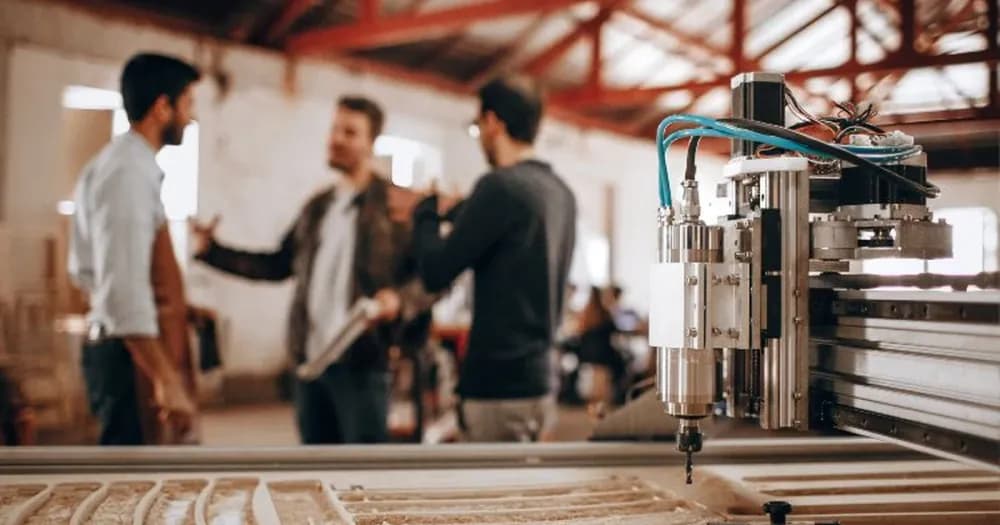
Sustained success in today’s dynamic and competitive business landscape hinges on a company’s ability to consistently evolve and improve its offerings. At the heart of this evolution lies innovation, a driving force that is particularly crucial within the realm of product development. More than just creating something new, innovation in this context signifies a commitment to pushing boundaries, challenging assumptions, and ultimately delivering products that resonate with and exceed customer expectations.
What is Product Innovation?
Product innovation is the process of developing a new product, or making a meaningful change to an existing one, that delivers new value to customers, whether through new features, a new use case, a new price point, or a fundamentally new way of solving the underlying problem. It is a narrower term than "innovation in product development": the latter covers how a company organizes and executes development work, product innovation is specifically about the resulting change in what the product itself offers the customer.
Why Strategic Product Innovation is the Lifeblood of Business Growth
Integrating innovation into the product development lifecycle offers a multitude of compelling advantages that are vital for long-term prosperity:
-
Meeting Evolving Customer Needs
Customer needs and preferences are constantly shifting, driven by technological advancements, changing lifestyles, and emerging trends. Innovation allows businesses to proactively anticipate and address these evolving demands, ensuring their products remain relevant and desirable. -
Gaining a Competitive Advantage
In crowded marketplaces, innovation is a key differentiator. By developing unique and superior products, companies have a better chance to stand out from the competition, attract customers, and capture a larger market share. -
Driving Growth and Creating New Markets
Truly groundbreaking innovation is key to the creation of entirely new product categories, opening up unprecedented opportunities for growth and establishing the innovating company as a market leader. -
Enhancing Brand Relevance and Perception
A consistent track record of innovation enhances a brand’s image as forward-thinking, dynamic, and committed to providing cutting-edge solutions. This positive perception serves to attract both customers and top talent. -
Attracting and Retaining Top Talent
Individuals who are passionate about creating impactful products are typically drawn to companies that prioritize innovation. A culture of innovation is a significant factor in attracting and retaining skilled engineers, designers, and product managers. -
Improving Profitability and ROI
Innovative products often command premium pricing due to their unique features or superior performance. This leads to higher profit margins and a greater return on investment in product development efforts. -
Ensuring Long-Term Sustainability
In the long run, companies that fail to innovate risk becoming obsolete as their products become outdated and less appealing to customers. A commitment to innovation ensures long-term viability and adaptability in the face of market changes.
6 Types of Product Innovation
Innovation in product development manifests in various forms, each with its own characteristics and impact:
- Incremental Innovation: This involves making small, gradual improvements to existing products, focused on enhancing features, improving efficiency, or reducing costs.
- Disruptive Innovation: This introduces new products or services that initially appeal to a niche market, often with lower performance or price points than existing offerings. Over time, they will disrupt the established market and displace incumbents.
- Architectural Innovation: This involves taking existing technologies and applying them to new customer segments, by reconfiguring the architecture of a product or system.
- Radical Innovation: This involves creating entirely new products or technologies that represent a significant departure from existing offerings and can often create entirely new industries.
Radical Innovation
The introduction of a completely new product or business model that did not previously exist, distinct from disruptive innovation because it does not necessarily start at the low end of an existing market, it can create an entirely new market category outright.
Modular Innovation
Changing one component or technology inside a product while leaving its overall architecture untouched, for example, swapping a product's core engine or software stack for a materially better one without changing how the rest of the product is built or how customers use it.
Sustaining Innovation
Improvements aimed at a company's best, most demanding existing customers, usually by making the current product more powerful or capable. It is the innovation-strategy counterpart to disruptive innovation in Clayton Christensen's original framework, sustaining innovation defends the current market, disruptive innovation creates a new one.
Build a Product Innovation Strategy: 5 Critical Pre-Launch Considerations
Resource & Cost Allocation
A realistic budget and staffing plan across the full development timeline, not just the initial prototype, underfunded projects most often stall during the Design and Development or Production phases, after the initial concept has already secured buy-in.
Market Demand & Customer Requirements
Validated evidence, from real customer interviews, surveys, or usage data, that the problem being solved is one customers actually have and will pay to solve, rather than a problem the internal team assumes exists.
Competitor Landscaping
A structured review of what competitors are already building, including tracking their patent filings, which reveals not just their current products but their R&D direction and technical priorities, surfacing gaps a new product could target before a competitor gets there first.
Legal, Regulatory, & Patent Frameworks
A Freedom to Operate (FTO) analysis checks that the new product will not infringe on an existing patent, trademark, or design right in every market it will be sold in, treated as a non-negotiable step before launch, not an afterthought, since an infringement claim discovered post-launch is far more expensive to resolve.
Value Proposition Durability
Whether the product's core advantage will still hold up in 2 to 3 years, or whether it depends entirely on a temporary gap, a competitor being slow, a cost advantage that will not last, that a well-funded competitor could close quickly.
The End-to-End Product Innovation Process
In-Depth Market Research & Front-End Analysis
The unglamorous work that determines whether everything after it succeeds: confirming the target customer, the size of the real addressable market, and the specific unmet need, before a single design decision is made. Teams that skip or shorten this step are the ones most likely to build something technically impressive that nobody actually needed.
Design Thinking, Prioritization, & Prototyping
Generating a wide range of possible solutions, prioritizing them against the validated customer need from the research phase, and building a prototype fast enough to get real user feedback before committing to full engineering. The point of a prototype at this stage is to be wrong cheaply, not to be polished.
Comprehensive Feasibility Study
A formal check across 3 dimensions before full investment: technical feasibility (can it actually be built as designed), financial feasibility (does the projected cost still support a viable price and margin), and operational feasibility (can the company actually manufacture, distribute, and support it at scale).
3 Actionable Ideation and Brainstorming Frameworks
Brainwriting
Participants write down ideas individually and silently, then pass them around anonymously for others to build on, rather than speaking them aloud in a group. This removes the bias of louder or more senior voices dominating a session and reliably surfaces ideas from quieter team members that a verbal brainstorm would have missed.
Rapid Ideation
A strict time-boxed sprint, often just a few minutes, where the only goal is volume: getting as many ideas down as possible with zero evaluation or discussion. The judgment-free time pressure is deliberate, it is designed to get past a team's first, most obvious ideas to the less predictable ones underneath.
Starbursting
A structured technique that generates questions instead of answers, systematically working through Who, What, Where, When, Why, and How for a given idea before committing to it. It is most useful right after a rapid-ideation session, to pressure-test the raw ideas it produced and surface gaps before real resources get committed.
How to Measure Product Innovation Success
Assessing the impact of innovation efforts is crucial for justifying investment and guiding future strategies:
- Number of New Products Launched: Tracks the output of the innovation process.
- Revenue Generated from New Products: Measures the financial success of innovative offerings.
- Market Share Gains: Indicates the competitive impact of new products.
- Customer Adoption Rates: Reflects how well new products are being received by the target market.
- Patent Filings: Quantifies the intellectual property generated through innovation.
- Employee Engagement in Innovation Initiatives: Gauges the level of participation and enthusiasm for innovation within the organization.
Real-World Examples of Product Innovation
3 recognizable examples across different innovation types, chosen because each is well documented rather than because it fits a template:
- Adobe Firefly (sustaining/architectural): rather than launching a standalone AI product, Adobe embedded generative image editing directly into Photoshop, letting users select and replace elements or extend a canvas natively. It is a case of innovation extending an existing, dominant product rather than replacing it.
- Tesla's vertically integrated EV platform (architectural): Tesla did not invent electric propulsion or touchscreen interfaces individually, its innovation was architectural, rearranging existing battery, software, and direct-to-consumer sales technologies into a new product configuration incumbent automakers had not assembled together.
- Dyson's cyclone technology (radical): a genuinely new underlying technology, bagless cyclonic separation, that created an entirely new product category and pricing tier within an existing, mature market (vacuum cleaners) rather than incrementally improving what existed.
The Evolution of Product Development
Several emerging trends are shaping the future of innovation in product development:
-
The Role of AI and Machine Learning
AI and machine learning are increasingly being used to analyze data, identify trends, and even generate new product ideas, accelerating the pace of innovation. -
The Importance of Sustainability and Ethical Considerations
Future innovation will increasingly need to address environmental concerns and ethical implications, leading to the development of more sustainable and responsible products. -
The Rise of Personalized and Customized Products
Advances in technology are enabling the creation of highly personalized and customized products that cater to individual customer needs and preferences. -
The Integration of Digital and Physical Products
The lines between physical and digital products are blurring, resulting in the development of connected devices and integrated experiences that offer new levels of functionality and value.
Conclusion
Innovation is not merely a desirable attribute in product development; it is the very lifeblood that sustains competitiveness, drives growth, and ensures long-term relevance in a constantly evolving market. By fostering a culture that embraces creativity, risk-taking, and collaboration, and by strategically leveraging emerging trends and technologies, businesses may unlock the transformative power of innovation to create products that not only meet but exceed the expectations of their customers, paving the way for a prosperous future.
Frequently Asked Questions
-
What is the difference between product and process innovation?
Product innovation changes what a company offers the customer, a new feature, a new product, a new way of solving their problem. Process innovation changes how the company creates or delivers that offering, a faster manufacturing method, a more efficient supply chain, without necessarily changing what the customer receives. A company can improve profitably through process innovation alone even while its product stays unchanged.
-
What is the difference between radical and incremental innovation?
Incremental innovation makes small, continuous improvements to an existing product, extending its life and defending its current market position. Radical innovation introduces something that did not exist before, often creating a new market category rather than competing within an existing one. Most companies run both simultaneously, incremental innovation funds the business day to day, radical innovation is a longer-term, higher-risk bet on future growth.
-
What is the difference between Brainwriting, Rapid Ideation, and Starbursting?
Brainwriting and Rapid Ideation are both idea-generation techniques but differ in format, Brainwriting is written and anonymous to reduce social bias, Rapid Ideation is a fast, judgment-free sprint focused purely on volume. Starbursting is a different kind of tool entirely, it generates structured questions (Who, What, Where, When, Why, How) about an idea rather than generating new ideas, making it the natural next step to pressure-test whatever Brainwriting or Rapid Ideation produced.